
Spanish Immersion Programs & Curriculum in Peru
Cusco presents Spanish within a cultural landscape unlike any other. Quechua and Spanish coexist, Inca foundations support colonial buildings, and contemporary life unfolds alongside traditions that remain central to Andean identity.
Learning Spanish here is therefore not only about communicating in another language. It is also an opportunity to understand how Peru’s different histories, regions and cultures intersect.
Your private curriculum can connect language study with Cusco, the Sacred Valley and Machu Picchu while remaining firmly focused on your personal or professional objectives.
Preparing for Spanish in an Andean setting
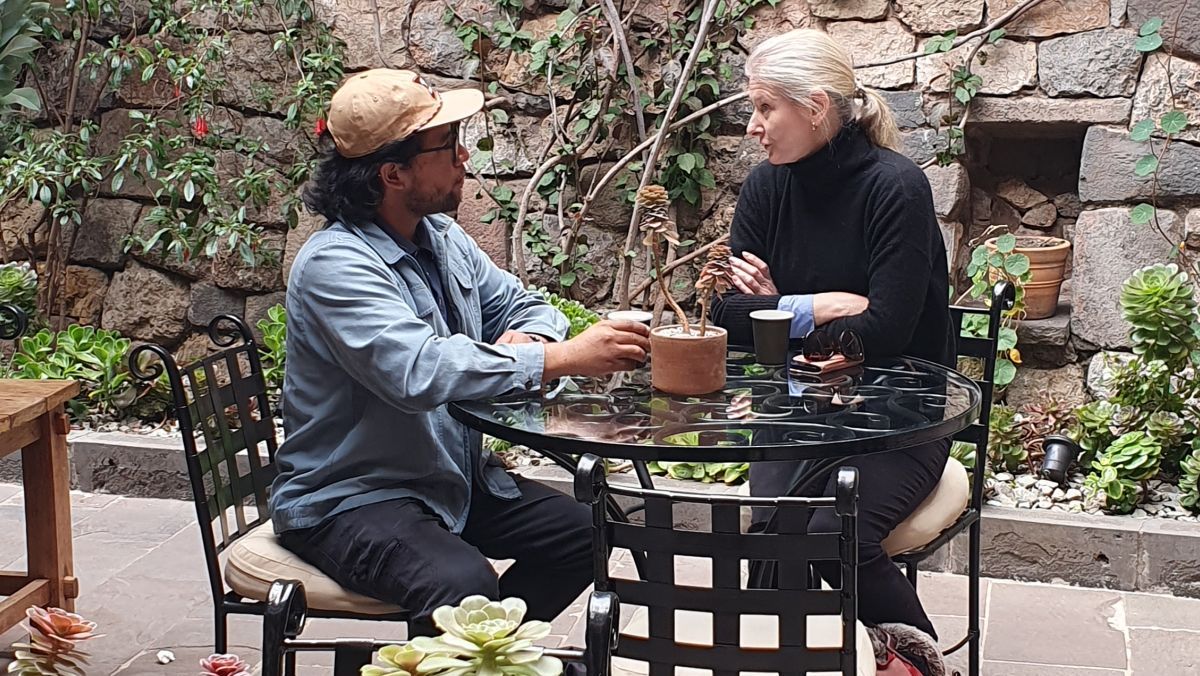
We plan the program before your arrival by reviewing your existing Spanish, interests and reasons for studying.
The daily pace also considers the realities of being in Cusco. At approximately 3,400 metres above sea level, the city requires some visitors to take additional time to acclimatize. Classes and activities can be arranged accordingly, particularly during the first day.
Your learning plan may combine:
- Practical conversation
- Listening comprehension
- Grammar in context
- Pronunciation
- Vocabulary development
- Reading and writing
- Peruvian history and society
- Andean culture
- Professional terminology
- Executive communication
- Regional and international Spanish
The curriculum follows a progression aligned with the Common European Framework of Reference for Languages (CEFR), but your interests and progress determine how that framework is applied.
Spanish Immersion for Lifelong Learners
This curriculum is for adults who want Spanish to enrich their understanding of Peru and make travel more meaningful.
Private instruction allows you to study at an appropriate pace while exploring subjects that interest you. Your lessons can prepare you for everyday communication and help you understand what you encounter during visits around Cusco.
Spanish for exploring Peru
Your curriculum may help you:
- Introduce yourself and meet local people
- Talk about your interests and previous travels
- Ask and answer practical questions
- Order food and discuss Peruvian dishes
- Shop in markets
- Ask about textiles, crafts and regional products
- Use taxis and other transportation
- Request directions
- Arrange visits and excursions
- Describe archaeological sites and landscapes
- Talk about past events
- Explain future plans
- Express preferences and opinions
- Understand common Peruvian expressions
- Read cultural and historical information
- Write personal messages
- Participate more confidently in conversations
History and culture as learning material
Peru provides an unusually broad range of subjects for Spanish study:
- The Inca Empire
- Earlier Andean civilizations
- Cusco before and after the Spanish arrival
- Machu Picchu
- The Sacred Valley
- Quechua language and identity
- Indigenous communities and traditions
- Colonial architecture and religious art
- Peruvian independence
- Regional festivals
- Textiles and traditional crafts
- Peruvian gastronomy
- Geography and biodiversity
- Contemporary Peruvian society
Your instructor can select readings, vocabulary and discussion activities suited to your level. Cultural content supports the language curriculum instead of becoming a separate lecture in English.
Spanish Immersion for Professionals
The Professionals program is intended for people whose work brings them into contact with Spanish-speaking communities, colleagues, clients, students or research participants.
Cusco is particularly relevant for professionals working in tourism, healthcare, education, archaeology, anthropology, environmental conservation and international development.
Communication within your field
Your course may prepare you to:
- Describe your education and professional role
- Explain the purpose of your work
- Conduct interviews
- Ask clear follow-up questions
- Gather and verify information
- Explain procedures
- Give instructions and recommendations
- Communicate with clients, patients or communities
- Participate in meetings
- Coordinate schedules and field activities
- Conduct telephone and video conversations
- Present projects or research
- Write professional emails and reports
- Summarize findings
- Address concerns and misunderstandings
- Use culturally appropriate forms of communication
Specialized areas
Professional Spanish can be developed for fields such as:
- Healthcare and public health
- Education
- Archaeology
- Anthropology
- History and cultural heritage
- Tourism and hospitality
- International development
- Social and humanitarian work
- Environmental conservation
- Agriculture
- Research and academia
- Journalism
If you bring nonconfidential materials, your instructor can build activities around the language you actually use. These might include interview questions, presentations, questionnaires, field notes, terminology or correspondence.
The curriculum can also examine communication across cultural and linguistic differences, including the importance of Quechua in many Andean communities.
Spanish Immersion for Business Executives
The Business Executives curriculum is designed for managers, entrepreneurs and organizational leaders working with Peruvian or Latin American partners.
Private instruction concentrates on the responsibilities associated with your position rather than following a general business course.
Executive situations
Your learning plan may include:
- Presenting your organization
- Explaining products and services
- Describing operations
- Communicating strategy
- Leading and contributing to meetings
- Delivering presentations
- Discussing budgets and results
- Explaining forecasts
- Negotiating commercial terms
- Evaluating proposals
- Managing projects
- Establishing responsibilities and deadlines
- Assessing risks and opportunities
- Giving feedback
- Resolving disagreements
- Developing professional relationships
- Participating in business meals
- Writing executive correspondence
Peru’s economic and professional context
Business content can reflect sectors important to Peru, including tourism, agriculture, gastronomy, natural resources, cultural heritage and international development.
Classes can explore forms of courtesy, relationship-building and professional communication that participants may encounter in Peru, without assuming that every organization or individual communicates in the same way.
For executives working across several countries, the curriculum may compare Peruvian vocabulary and business practices with those found elsewhere in Latin America and Spain.
Spanish, Quechua and regional identity
Peru is linguistically diverse. Spanish is spoken throughout the country, while Quechua, Aymara and other Indigenous languages remain important parts of national life.
In Cusco, you will hear Spanish influenced by the Andean environment and by contact with Quechua.
Your lessons can introduce:
- Vocabulary commonly used in Peru
- Expressions heard in Cusco
- Quechua words incorporated into regional Spanish
- Features of Andean pronunciation
- Formal and informal forms of address
- Differences among coastal, Andean and Amazonian Spanish
- Comparisons with other Spanish-speaking countries
- Internationally understandable alternatives
You are not expected to learn Quechua as part of the Spanish curriculum. However, understanding its cultural and linguistic importance provides valuable context for communicating in the region.
Personalizing your curriculum within the Peru Special
The shared itinerary includes classes, meals and cultural experiences in Cusco, the Sacred Valley and Machu Picchu. Within that itinerary, your private curriculum can reflect your Spanish level, interests and professional objectives.
Your learning experience may include:
- Language preparation for visits and excursions
- Vocabulary connected with Peruvian history, culture and gastronomy
- Discussion and follow-up activities based on shared experiences
- General, professional or executive Spanish suited to your goals
- Individual feedback throughout the program
The Cusco and Machu Picchu immersion is offered on selected dates. Each Special has a defined arrival date, departure date and shared itinerary.
The published Peru Special includes:
- Private Spanish classes
- A curriculum personalized to your objectives
- Boutique accommodation in Cusco’s San Blas district
- Meals and selected dining experiences
- Published cultural activities and excursions
- Learning materials
- Personal feedback
- Transportation according to the published itinerary
Private classes are arranged for one participant or for two people studying together, according to the format and availability of each Peru Special.
Make language part of your journey through Peru
A visit to Cusco can be memorable without speaking Spanish, but language changes the nature of the experience. It lets you ask better questions, understand different perspectives and engage with Peru beyond signs, tours and translations.
Tell Pedro how Spanish fits into your journey—whether you are travelling for personal discovery, professional work, academic research or business.
Your proposal will explain the selected dates, accommodation, cultural experiences and travel arrangements while showing how the private curriculum can reflect your learning objectives.
Request your personalized proposal, or contact Pedro directly at
Frequently asked questions
Should I allow time to adjust to Cusco’s altitude?
Yes. Cusco is approximately 3,400 metres above sea level, and some visitors need time to acclimatize. It is sensible to keep your first day relatively light, stay hydrated and avoid overly demanding activities immediately after arrival.
Does the Peru Special include Machu Picchu?
Yes. Machu Picchu and the Sacred Valley are part of the published Peru Special itinerary. Your classes can prepare you for these visits and use them as material for follow-up discussion.
Do I need to study Quechua?
No. Your classes concentrate on Spanish. However, the curriculum can introduce Quechua words used in local Spanish and explain the language’s importance in Cusco and the Andes.
Is Peruvian Spanish suitable for beginners?
Yes. Beginners can establish a clear foundation in pronunciation, essential vocabulary and grammar. Local language features are introduced gradually and in context.
How are cultural visits connected with the classes?
Cultural experiences complement structured instruction but do not automatically replace it. The best arrangement often combines preparation before a visit, real-world observation and discussion afterward.
Which professional fields are particularly relevant in Cusco?
Cusco can be especially valuable for professionals working in tourism, archaeology, anthropology, education, healthcare, cultural heritage, environmental work and international development. Other professional curricula can also be prepared.
How long is the Peru Special?
Each Peru Special has published arrival and departure dates. Review the current destination page for the exact duration, dates and itinerary.
Can the daily schedule be adjusted if the altitude affects me?
Please tell us how you are feeling. The pace of private instruction can be adjusted when practical, although shared excursions, meals and transfers follow the published itinerary.